Rothesay is a picturesque town located on the Isle of Bute, which is one of the islands in the Firth of Clyde, off the west coast of Scotland. Known for its Victorian architecture, scenic landscapes, and rich history, Rothesay is a popular destination for tourists and offers a charming blend of old-world charm and natural beauty. Here's a description of Rothesay:
Victorian Architecture: Rothesay is renowned for its well-preserved Victorian architecture, which lends the town a distinctive character. Visitors can stroll along the streets and admire the grand, ornate buildings that reflect the town's prosperous past as a Victorian seaside resort.
Rothesay Castle: The town is home to Rothesay Castle, a historic fortress dating back to the 13th century. The castle's circular design and moat make it a unique attraction. It offers insights into Scotland's medieval history and provides panoramic views of the town and the surrounding landscape from its battlements.
Seafront Promenade: Rothesay boasts a scenic seafront promenade along the shores of the Firth of Clyde. The promenade is ideal for leisurely walks, and visitors can take in breathtaking views of the water, the nearby islands, and the mountains of the Scottish mainland.
Esplanade Gardens: Adjacent to the seafront promenade, you'll find the Esplanade Gardens, a well-maintained park with colorful flowerbeds, manicured lawns, and benches. It's a pleasant spot for picnics, relaxation, and enjoying the fresh sea air.
Isle of Bute Discovery Centre: The Isle of Bute Discovery Centre is an excellent starting point for exploring Rothesay and the rest of the island. It offers information about local attractions, history, and cultural events, making it a valuable resource for tourists.
Outdoor Activities: Rothesay and the Isle of Bute offer numerous outdoor activities, including hiking, cycling, golf, and water sports. There are also opportunities for fishing and wildlife watching, as the island is home to a variety of bird species and seals.
Cultural Events: Throughout the year, Rothesay hosts various cultural events and festivals, including music concerts, art exhibitions, and Highland games. These events provide a taste of the local culture and entertainment.
Local Cuisine: Rothesay offers a range of dining options, from traditional Scottish fish and chips to more upscale restaurants serving locally sourced seafood. Visitors can savor delicious meals while enjoying views of the sea.
Peaceful Atmosphere: Rothesay is known for its tranquil and laid-back atmosphere. It's a place where visitors can escape the hustle and bustle of city life and experience a slower pace in a scenic coastal setting.
In summary, Rothesay is a charming town on the Isle of Bute, Scotland, celebrated for its Victorian architecture, historical sites, beautiful seafront, and outdoor recreational opportunities. It's a destination that combines natural beauty with a rich cultural and historical heritage, making it an appealing place for travelers seeking a relaxing and culturally enriching experience.
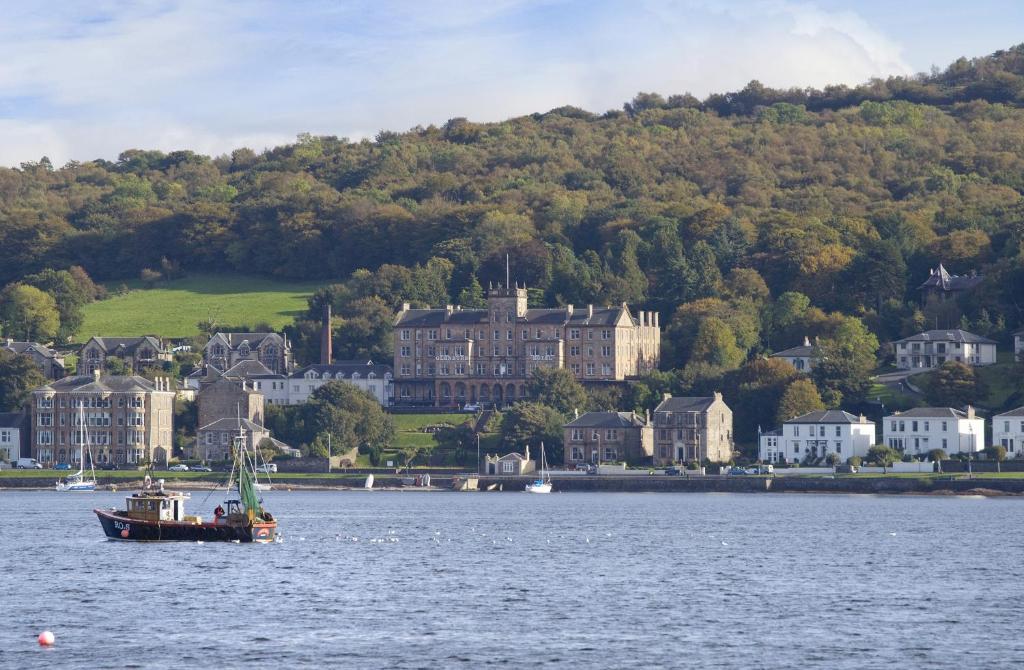
The Glenburn Hotel
The Glenburn Hotel is situated on the Isle of Bute, known for its picturesque landscapes and coastal beauty. It is perched above its own terraced gardens, providing stunning panoramic views that extend across Rothesay Bay to the Cowal Peninsula. This location offers a scenic and tranquil setting.
Show More
Cadillac Kustomz Hotel
Located on the beachfront in Rothesay and featuring a bar, Cadillac Kustomz Hotel has free WiFi throughout the property. Cadillac Kustomz Hotel enjoys a prime location directly on the beachfront in Rothesay. This offers guests the opportunity to savor stunning views of the sea
Show More
The Victoria Hotel
The Victoria Hotel is a charming establishment located in Rothesay on the Isle of Bute, offering elegant accommodations and dining options. The Victoria Hotel enjoys a picturesque location with beautiful views overlooking the Winter Gardens and Rothesay Bay.
Show MoreRothesay, located on the Isle of Bute in Scotland, is a charming and historic holiday destination with a lot to offer. Here's a description of Rothesay as a holiday location:
The Glenburn Hotel, Rothesay:
- Located in the picturesque town of Rothesay on the Isle of Bute, The Glenburn Hotel is a historic and charming property.
- The hotel offers stunning views of Rothesay Bay and is situated close to various attractions on the island.
- The Glenburn Hotel has a mix of traditional and contemporary decor, providing a comfortable and welcoming atmosphere.
- Facilities may include a restaurant, bar, and event spaces for weddings and functions.
- The hotel is well-known for its hospitality and is a popular choice for tourists exploring Bute.
Cadillac Kustomz Hotel, Rothesay:
- Cadillac Kustomz Hotel is not a widely recognized hotel name in Rothesay as of my last knowledge update in 2021. It's possible that it's a new establishment, a boutique hotel, or a smaller lodging option.
- The name suggests a unique and possibly themed hotel experience. It's worth checking recent reviews or contacting the hotel directly for detailed information about its offerings, location, and services.
The Victoria Hotel, Rothesay:
- The Victoria Hotel is a well-known hotel located in the heart of Rothesay.
- It's a historic building that has been providing accommodations to travelers for many years.
- The hotel may offer a combination of traditional and modern amenities and services, including a restaurant and bar.
- The Victoria Hotel is often praised for its central location, making it convenient for visitors to explore the town's attractions and enjoy views of Rothesay Bay.
Scenic Beauty: Rothesay is set amidst stunning natural beauty, surrounded by the clear waters of the Firth of Clyde and lush, rolling hills. The town itself is known for its colorful gardens and beautiful Victorian architecture.
Island Retreat: As part of the Isle of Bute, Rothesay offers a peaceful and tranquil escape from the hustle and bustle of city life. It's an ideal destination for those seeking a relaxing holiday in a scenic and remote setting.
Historic Charm: Rothesay boasts a rich history, evident in its historic buildings, including the famous Rothesay Castle. Visitors can explore the castle's ruins and learn about the area's past.
Outdoor Activities: The island provides ample opportunities for outdoor enthusiasts. You can go hiking or biking on various trails, take leisurely walks along the beach, or even try your hand at fishing or golfing.
Victorian Promenade: Rothesay's waterfront is home to a picturesque Victorian promenade, which is perfect for strolling, taking in the sea views, and enjoying the fresh sea breeze. It's a great place to relax and soak in the peaceful atmosphere.
Marine Adventures: The town is well-known for its sailing heritage, and you can partake in various water activities, including sailing, kayaking, and even wildlife watching.
Local Cuisine: Rothesay offers a taste of traditional Scottish cuisine. Enjoy fresh seafood, Scotch pies, and other local delicacies in the town's restaurants and cafes.
Cultural Attractions: The town features several cultural attractions, including art galleries, museums, and theaters, providing visitors with a glimpse into the local arts and heritage.
Festivals and Events: Rothesay hosts various festivals and events throughout the year, including music festivals, Highland games, and cultural celebrations. Check the local event calendar to see if your visit coincides with any of these vibrant gatherings.
Warm Hospitality: Rothesay is known for its warm and friendly locals who welcome visitors with open arms. This creates a welcoming and inviting atmosphere for tourists.
Rothesay, with its combination of natural beauty, historical charm, and a range of outdoor activities, is an excellent choice for a relaxing and scenic holiday. It provides an opportunity to disconnect from the daily grind and immerse yourself in the tranquility and rich history of the Isle of Bute.
Mount Stuart, located on the Isle of Bute in Scotland, is an iconic and historic mansion and estate. Here's a description of Mount Stuart in Rothesay:
Architectural Marvel: Mount Stuart is renowned for its stunning neo-Gothic architecture. It was designed by Sir Robert Rowand Anderson and completed in the late 19th century. The exterior features intricate stonework and pointed arches, typical of the Gothic Revival style.
Picturesque Setting: The mansion is set within an expansive, beautifully landscaped estate overlooking the Firth of Clyde. The surrounding gardens and woodlands are meticulously maintained and add to the estate's charm.
Art and Decor: The interiors of Mount Stuart are equally impressive. Visitors can admire a rich collection of art, including paintings, sculptures, and other decorative pieces. The house is also known for its distinctive stained glass windows, which are notable for their vibrant and intricate designs.
Historical Significance: Mount Stuart has a rich history as the ancestral home of the Marquesses of Bute. The Bute family played a significant role in the development of the nearby town of Rothesay and the Isle of Bute as a whole.
Gardens and Grounds: The estate features beautifully landscaped gardens and woodlands, with various plant species and a renowned Victorian Kitchen Garden. The gardens are a delightful place to explore, and they often host various events and exhibitions.
Visitor Experience: Mount Stuart is open to the public, allowing visitors to explore its interiors and gardens. Guided tours are available, offering insights into the history, architecture, and art collections.
Events and Activities: The estate often hosts cultural and artistic events, making it a hub for music, arts, and culture on the Isle of Bute. These events can include concerts, exhibitions, and educational programs.
Conservation and Restoration: Over the years, Mount Stuart has undergone significant restoration efforts to preserve its architectural and historical significance. These efforts ensure that this historical landmark remains accessible for future generations.
Mount Stuart is a remarkable historical and cultural landmark that offers visitors a glimpse into Scotland's rich heritage and artistic traditions. Its stunning architecture, extensive art collections, and scenic surroundings make it a must-visit destination on the Isle of Bute.
Rothesay ICenter, located on the Isle of Bute in Scotland, is a popular tourist destination. The VisitScotland iCentre, or information center, in Rothesay serves as a valuable resource for tourists and visitors. Here's a description of what you might expect to find at the Rothesay VisitScotland iCentre:
Tourist Information: The primary purpose of the VisitScotland iCentre in Rothesay is to provide information to tourists and visitors. It's a one-stop location where you can obtain brochures, maps, and guidance on local attractions, events, and accommodations.
Friendly Staff: The center is typically staffed by knowledgeable and friendly individuals who can offer advice and recommendations on things to do, places to visit, and where to stay. They can help you plan your visit to Rothesay and the surrounding areas.
Maps and Guides: You can expect to find various maps and guides for Rothesay and the Isle of Bute, including information about local landmarks, historical sites, walking trails, and other points of interest.
Accommodation Information: The iCentre can provide information on hotels, guesthouses, self-catering accommodations, and other places to stay in Rothesay and the surrounding area.
Event and Activity Information: The staff at the center can inform you about upcoming events, festivals, and activities taking place in and around Rothesay. They may also assist in booking tickets for events or activities.
Transportation Guidance: You can receive information about transportation options to and from Rothesay, including details about ferries, buses, and other forms of local transport.
Souvenirs: Many VisitScotland iCentres have a selection of Scottish souvenirs, gifts, and local products that you can purchase to remember your visit.
Accessibility: VisitScotland iCentres are typically accessible to all, including individuals with disabilities. They often have accessible facilities and services.
Please note that services and facilities may have changed or evolved since my last update in 2021. It's advisable to check the VisitScotland website or contact the Rothesay iCentre directly for the most current information about their services, hours of operation, and any additional features or changes that may have occurred since then.
Rothesay's Victorian Toilets, also known as the Rothesay Victorian Loos, are a unique and historic public restroom facility located in Rothesay on the Isle of Bute in Scotland. Here's a description of these distinctive toilets:
Historical Significance: Rothesay's Victorian Toilets are a rare and well-preserved example of late 19th-century public conveniences. They were constructed in 1899 and represent an important part of the town's history.
Architectural Beauty: The toilets are celebrated for their ornate and elegant architecture, designed in a Victorian style. They feature decorative ironwork, stained glass windows, and polished woodwork, making them more akin to a small, decorative building rather than a typical public restroom.
Stained Glass Windows: The most striking feature of these Victorian Toilets is the stained glass windows. These windows often depict scenic and maritime themes, adding to the beauty and uniqueness of the facility.
Historical Preservation: Over the years, efforts have been made to preserve and maintain these toilets, ensuring that they remain a functioning part of Rothesay's history. This has led to their recognition as a historic landmark.
Public Use: Despite their historical significance and ornate design, the Rothesay Victorian Toilets continue to serve their original purpose as public conveniences. Visitors and residents can use these facilities when needed.
Tourist Attraction: Due to their unique architecture and historical value, the Rothesay Victorian Toilets have become a tourist attraction in their own right. Visitors often come to admire the building's design and learn about their historical context.
Photographic Opportunity: The toilets offer an excellent backdrop for photography, with their Victorian charm and distinctive stained glass windows.
Accessibility: These historic toilets are typically well-maintained and accessible to the public. They are usually open during regular business hours.
Visiting Rothesay's Victorian Toilets is a way to step back in time and appreciate the craftsmanship and aesthetics of a bygone era. It's an unusual and fascinating historical attraction that showcases the Victorian era's dedication to architectural beauty even in the most functional of structures. Please note that the availability and conditions of these toilets may have changed since my last knowledge update in September 2021, so it's advisable to verify their current status and accessibility if you plan to visit.
Rothesay Castle is a historic medieval fortress located in the town of Rothesay on the Isle of Bute in Scotland. Here's a description of Rothesay Castle:
Historical Significance: Rothesay Castle is a significant historical landmark with origins dating back to the early 13th century. It holds a prominent place in the history of the Isle of Bute and Scotland as a whole.
Architectural Features: The castle is a well-preserved example of a circular moated castle, making it relatively unique in design. It consists of a circular curtain wall with a central courtyard, which is surrounded by a deep, water-filled moat. The design served both defensive and symbolic purposes.
Historical Timeline: Rothesay Castle has seen its share of historical events. It was constructed in the early 13th century by the Stewart family and was subsequently modified and expanded over the centuries. The castle played a role in various conflicts and battles, including the Wars of Independence.
Gatehouse: The gatehouse, featuring a drawbridge and portcullis, is one of the most distinctive features of the castle. It's a prime example of medieval military architecture and was used to control access to the inner courtyard.
Courtyard and Towers: Within the castle's central courtyard, you can explore various towers, including the King's Tower and the Queen's Tower, which were likely used as residential quarters. Each tower has its unique architectural elements and purpose.
Historical Displays: Rothesay Castle often features historical displays, information boards, and exhibits that provide insights into the history of the castle and the Isle of Bute.
Spectacular Views: From the top of the towers, visitors can enjoy panoramic views of Rothesay, the Isle of Bute, and the surrounding landscapes.
Visitor Experience: The castle is open to the public, and guided tours are available. It's a great place to learn about the history of the castle, the region, and Scotland's medieval past.
Surrounding Grounds: The castle is surrounded by well-kept gardens and green spaces, making it an enjoyable place to stroll and relax.
Rothesay Castle is not only a historical treasure but also a captivating architectural gem. It offers visitors a chance to step back in time and explore the rich history of Scotland while enjoying the picturesque setting on the Isle of Bute.
St. Blane's Chapel is a historic religious site located on the Isle of Bute in Scotland. Here's a description of St. Blane's Chapel:
Historical Significance: St. Blane's Chapel is an ancient Christian site with a history dating back to the early medieval period. It is named after Saint Blane, an early Christian missionary and bishop in Scotland.
Location: The chapel is situated in a picturesque and remote location on the southern end of the Isle of Bute, near Kingarth. Its setting offers breathtaking views of the surrounding countryside and the sea.
Architecture: The chapel itself is a well-preserved example of a medieval church. It is a simple and unadorned stone structure with an arched doorway, a chancel, and a small tower. The architecture reflects the ecclesiastical design of its era.
Historical Timeline: St. Blane's Chapel has a rich history. It is believed to have been founded in the 6th century, and it continued to serve as a place of worship and pilgrimage for centuries. The chapel was restored in the 19th century, which contributed to its preservation.
Pilgrimage Site: St. Blane's Chapel was an important pilgrimage site during the medieval period, drawing worshippers from the surrounding areas. Pilgrims came to venerate the relics of Saint Blane, who was considered a significant religious figure.
Natural Beauty: The chapel is surrounded by a beautiful natural landscape, and the nearby St. Blane's Hill offers panoramic views of the island and the sea. It's a peaceful and scenic location for visitors to explore.
Visitor Experience: St. Blane's Chapel is open to the public, and visitors can explore both the chapel and the surrounding grounds. Information boards and displays often provide historical context and details about the site.
Religious Services: Occasionally, religious services and events are held at St. Blane's Chapel, maintaining its spiritual importance.
Visiting St. Blane's Chapel is an opportunity to experience the historical and spiritual heritage of the Isle of Bute. The simplicity of the chapel's architecture and its tranquil location provide a sense of serenity and a connection to Scotland's early Christian history.
Bute Museum, also known as the Bute Museum of Natural History, is a cultural institution located on the Isle of Bute in Scotland. It serves as a repository of the island's rich heritage and offers a diverse range of exhibits and collections. Here's a description of Bute Museum:
Historical and Cultural Repository: Bute Museum is a hub for preserving and presenting the historical and cultural heritage of the Isle of Bute. It houses a wide array of artifacts, documents, and displays that help visitors understand the island's past.
Location: The museum is typically situated in a historic building, often in the town of Rothesay, which is the main settlement on the Isle of Bute. The location is usually convenient for visitors and easy to access.
Exhibits: The museum's exhibits cover a variety of topics, including natural history, geology, archaeology, and local industries. You can expect to find displays featuring fossils, minerals, local flora and fauna, and historical artifacts from Bute.
Archaeological Finds: Bute's rich history is reflected in the museum's collection of archaeological artifacts, including items from ancient settlements and historical periods.
Local Industries: The museum often showcases the industries that have played a vital role in the island's economy, such as fishing, agriculture, and tourism. These exhibits may include tools, equipment, and historical documents related to these industries.
Local Art and Culture: Some museums also include sections on the arts and culture of the island, featuring paintings, photographs, and information about local artists and notable figures.
Interactive Displays: Some museums incorporate interactive displays and educational materials to engage visitors, making it an enjoyable and informative experience for all ages.
Community Involvement: Bute Museum may host community events, lectures, and workshops related to the island's history and culture, fostering a sense of local pride and involvement.
Gift Shop: Many museums have a gift shop offering souvenirs, books, and other items related to Bute and its heritage.
Visitor Experience: The museum is typically open to the public and caters to tourists and locals alike. Knowledgeable staff or volunteers are often available to provide insights and answer questions.
Bute Museum serves as a valuable resource for anyone interested in the history and heritage of the Isle of Bute. It offers a chance to explore the island's past, from its geological origins to its more recent industrial and cultural history.
The Isle of Bute Distillery is a relatively new and exciting addition to the world of Scottish whisky production, located on the Isle of Bute in Scotland. Please note that my knowledge is based on information available up to September 2021, and the distillery's offerings and details may have evolved since then. Here's a general description of what you might expect from the Isle of Bute Distillery:
Location: The Isle of Bute Distillery is situated on the Isle of Bute, which is known for its natural beauty and has a rich history of whisky production.
Whisky Production: As a distillery, its primary focus is the production of whisky. It likely follows traditional Scottish whisky-making methods, including mashing, fermentation, distillation, and aging in oak casks.
Visitor Experience: Many Scottish distilleries offer visitor experiences, and it's possible that the Isle of Bute Distillery provides guided tours, tastings, and educational sessions about the whisky-making process.
Tasting Room: Distilleries typically have a tasting room where visitors can sample various expressions of their whisky. It's a chance to savor the flavors and characteristics of the spirits produced at the distillery.
Products: The distillery may produce a range of whisky products, including single malt Scotch whisky, blended whisky, and potentially other spirits like gin or vodka.
Local Ingredients: Many distilleries emphasize the use of local ingredients, such as water and grains, to create a unique and distinctive flavor profile that reflects the terroir of the region.
Events and Festivals: The Isle of Bute Distillery might participate in local events and festivals, showcasing their products and offering an opportunity to engage with the community.
Sustainability: Modern distilleries often have a focus on sustainability, including energy efficiency, waste reduction, and responsible sourcing of ingredients.
Heritage and Storytelling: Distilleries frequently share their own stories and the history of whisky production in the region, adding a layer of cultural richness to the visitor experience.
Gift Shop: Visitors often have the option to purchase bottles of the distillery's products and other whisky-related merchandise at an on-site gift shop.
To get the most current and specific information about the Isle of Bute Distillery, including their products, tours, and visitor offerings, I recommend checking their official website or contacting them directly. Keep in mind that the whisky industry can change and evolve, and new distilleries often bring their unique character to Scotland's rich whisky tradition. The Isle of Bute Distillery